- Green Home Design
- Energy-Efficient Appliances
- Before Buying a Heat Pump Water Heater, Check the Room
Before Buying a Heat Pump Water Heater, Check the Room
Check air space, temperature, drainage and service access before choosing a heat pump water heater.
 Priscilla Laychock2 min read
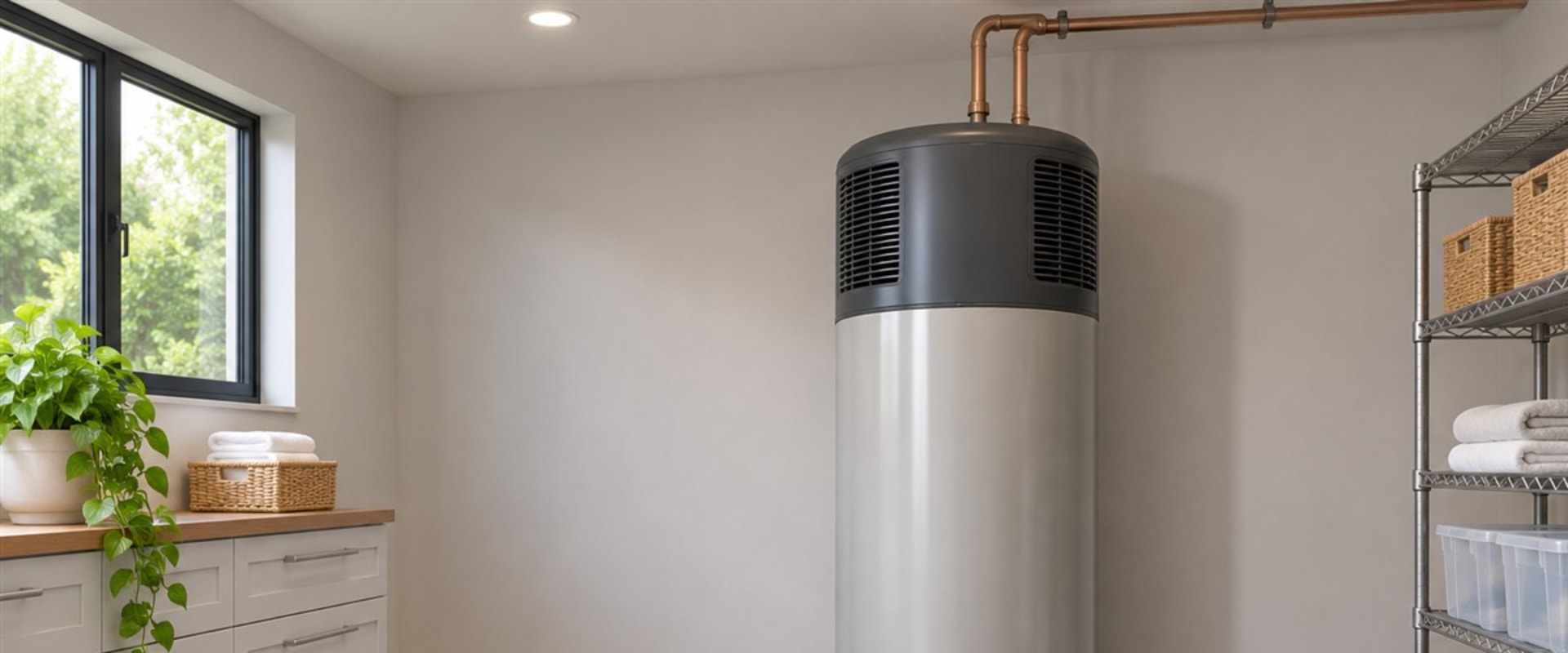
A heat pump water heater needs more than an empty patch of floor. It draws heat from surrounding air, so the room becomes part of the installation decision. Before comparing equipment prices, ask an installer to assess the proposed location and explain any changes it needs.
Measure the room as well as the tank
Record the room's length, width and ceiling height, doorway size, and the space occupied by shelves or other equipment. Ask for the proposed model's installation manual. Its air-volume, clearance and ducting requirements matter more than a general rule found in a product roundup.
ENERGY STAR's buying guidance discusses the importance of adequate surrounding air and suitable year-round temperatures. A cold location can reduce efficiency, and the unit can cool the space in which it operates. A large room is not automatically a suitable room if its conditions fall outside the equipment's requirements.
Give condensate a planned destination
Heat pump water heaters produce condensate. The Pacific Northwest National Laboratory installation guide explains that this water needs a drain route; some locations require a condensate pump. Ask where the water will go and who will install and maintain that route.
Do not confuse a condensate line with the tank's other safety and drainage provisions. Have the installer identify each item in the proposal rather than assuming a floor drain answers every installation requirement.
Check the everyday fit
- Ask how the unit's sound and cool exhaust air will affect adjoining rooms.
- Confirm that filters, controls and service panels will remain accessible.
- Have electrical supply and any necessary circuit work assessed for the specific model.
- Discuss the household's hot-water demand, including periods when several fixtures operate close together.
These questions complement our overview of ENERGY STAR certified products for a greener home. Certification is useful when comparing equipment, but site suitability still needs its own check.
Ask for an installation scope, not just a model number
Request a written list covering equipment, delivery access, electrical work, drainage, any approved air-routing changes, startup and owner instruction. Have the installer identify unresolved items before you accept the quote. Keep the final manual and maintenance instructions with the household's equipment records.
The useful outcome is a specific, documented fit between the product and its location. Avoid assuming that a more efficient technology will deliver a particular bill saving without considering the existing heater, local rates and household use.
Another article
Continuing Education for Green Construction: How to Make Your Home or Building More Eco-Friendly and Energy-Efficient
Learn about the latest sustainable construction practices and eco-friendly materials to make your home or building more environmentally friendly and energy-efficient.